Blog
News and commentary on Voter Registration Policy
Most Recent Articles
A little-known fact of American democracy is that most high school students are old enough to register to vote. Yet our systems make it far harder than it should be. In this piece for U.S. News & World Report, we explore the barriers young voters face and what needs to change.
High school students across the country are watching Minneapolis and asking what it means for them. This article reflects on power, protest, commitment, and the role young people play in shaping democracy when moments feel urgent and uncertain.
More than 187,000 Minnesota high school students are eligible to register or preregister to vote, a number larger than the margin of victory in the 2024 Minnesota elections.
All Articles
A little-known fact of American democracy is that most high school students are old enough to register to vote. Yet our systems make it far harder than it should be. In this piece for U.S. News & World Report, we explore the barriers young voters face and what needs to change.
High school students across the country are watching Minneapolis and asking what it means for them. This article reflects on power, protest, commitment, and the role young people play in shaping democracy when moments feel urgent and uncertain.
More than 187,000 Minnesota high school students are eligible to register or preregister to vote, a number larger than the margin of victory in the 2024 Minnesota elections.
New Jersey’s new preregistration law gives high school students a rare opportunity to shape a special election, starting with the January 15 voter registration deadline.
As a new year begins, millions of young people are gaining the right to vote. This is a reminder that civic power starts with registration, and that first-time voters can shape what comes next in 2026.
A look at why support for young voters fades when it matters most, and how meaningful civic engagement in high schools can change that, as highlighted in Laura Brill’s new piece in The Contrarian.
Laura W. Brill examines why youth voter registration fails and how public officials and school systems can drive real reform through high school access.
Teen voting doesn’t fail because teens don’t care. It fails because systems are confusing and adults underestimate their influence.
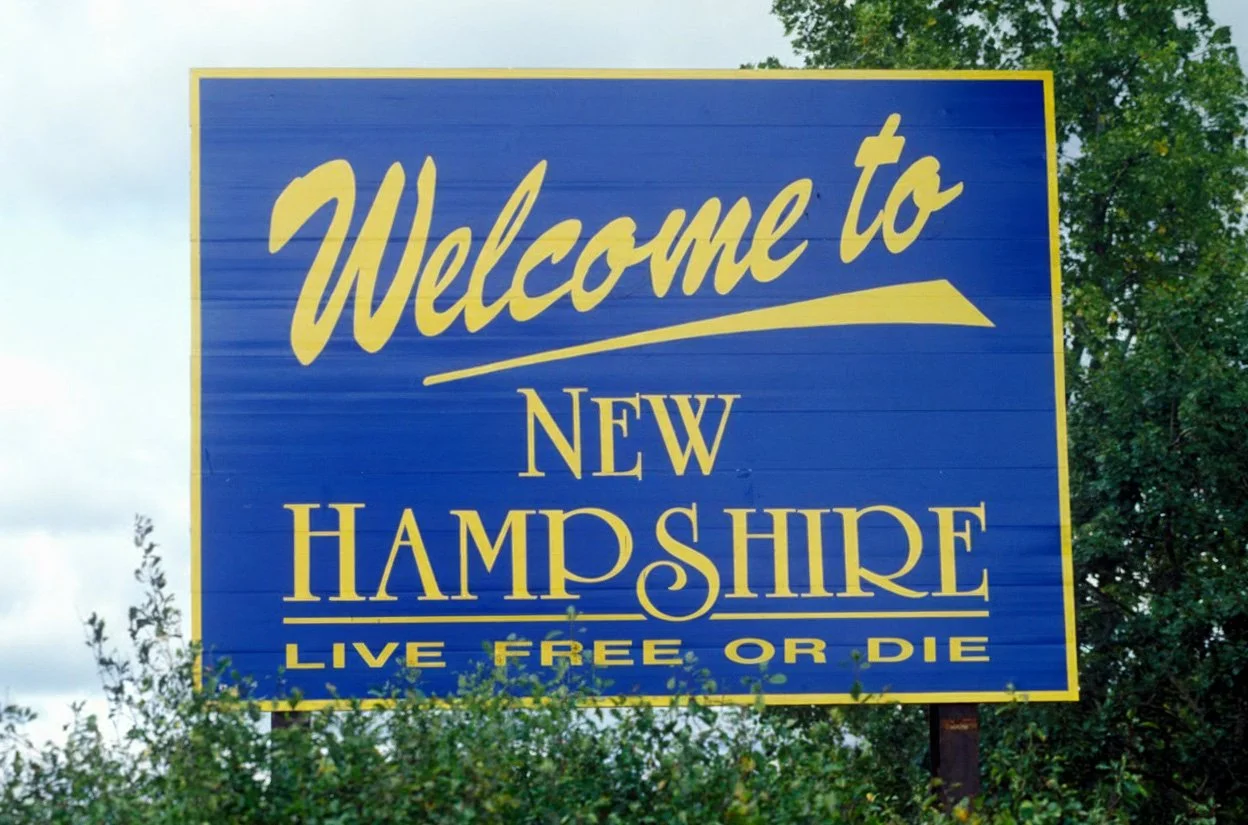
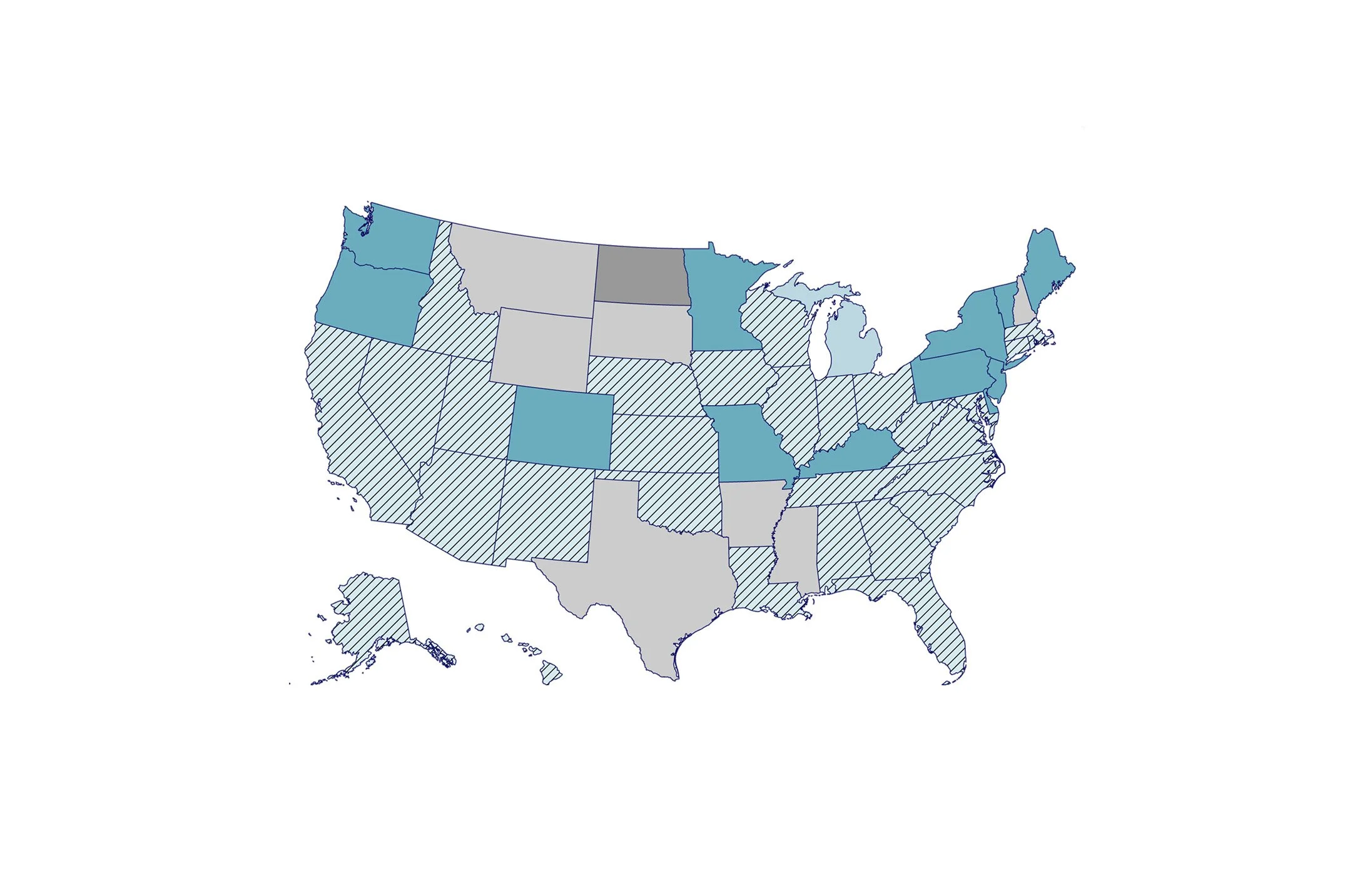
Young voters face steep registration barriers, and states like New Hampshire lag far behind Michigan and Virginia. Understanding these obstacles is key to improving youth turnout in 2026.
Laura Brill invites readers to a major Civics Center milestone and an SSIR conversation on youth engagement, democracy, and the systems shaping participation.
Post-2024 narratives said young voters were shifting right, but 2025 data shows strong youth engagement and solid pro-democracy support across key races.
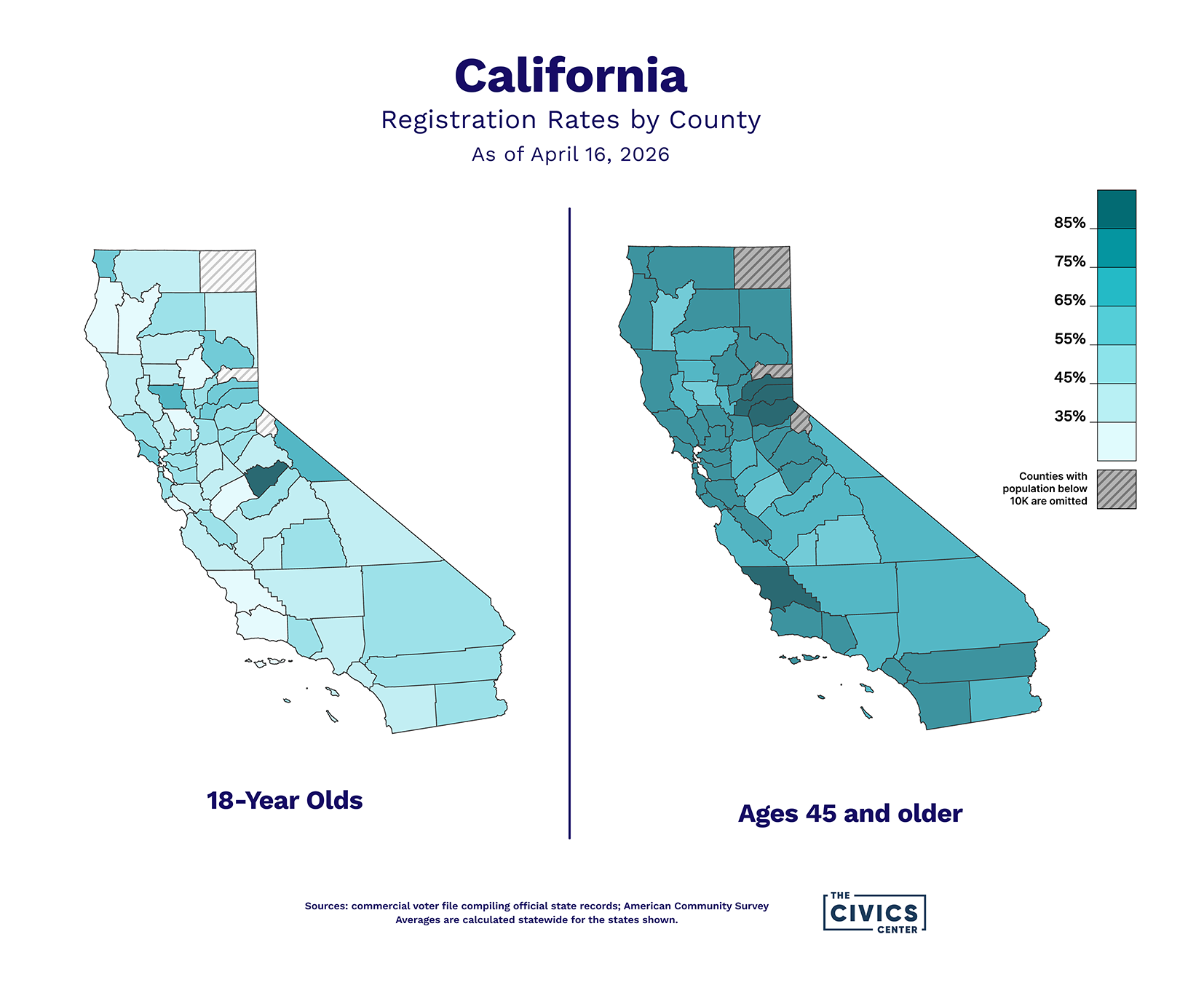
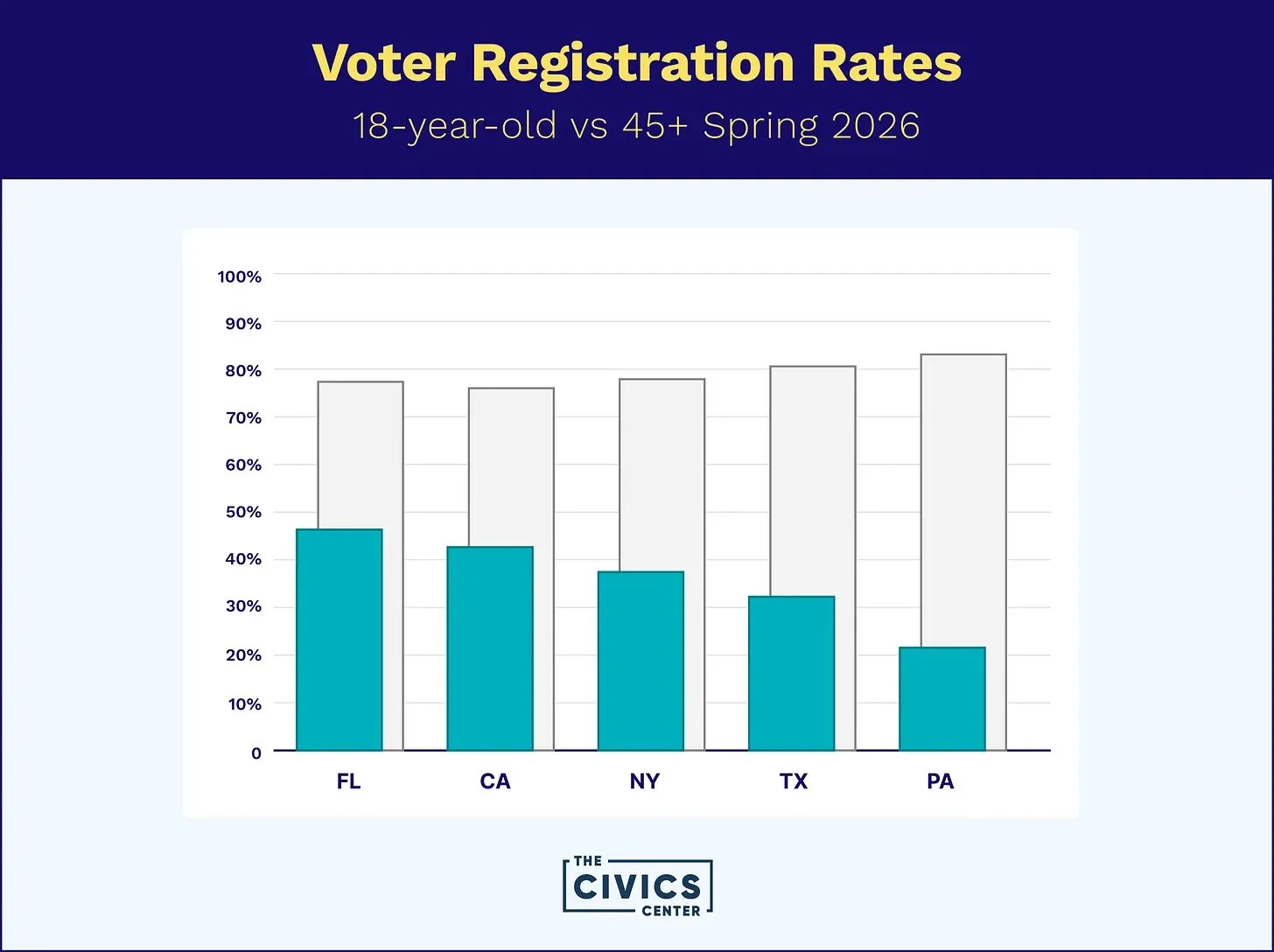
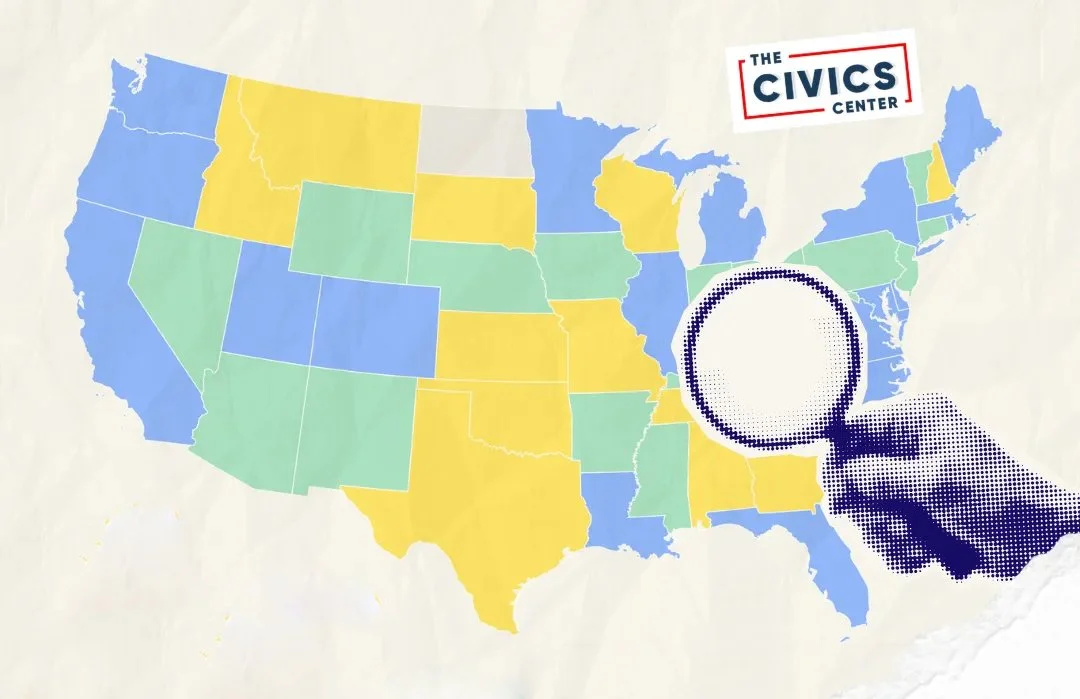
You can’t fix what you can’t see. That’s why we created data visualizations exposing the massive voter registration gap between young and old voters. High school students have the power to close that gap—and reshape the future of our democracy.
Take five minutes to stand up for democracy. The Election Assistance Commission is considering new rules that would make it harder to register to vote—submit your comment by October 20 to oppose this change.
The youth voter registration gap leaves millions of 18-year-olds without a voice in elections. Data visualizations show the disparities—and how teens can close them.
Only 25% of 18-year-olds in Pennsylvania are registered to vote compared to 74% of older voters. Closing the voter registration gap is key to strengthening democracy.
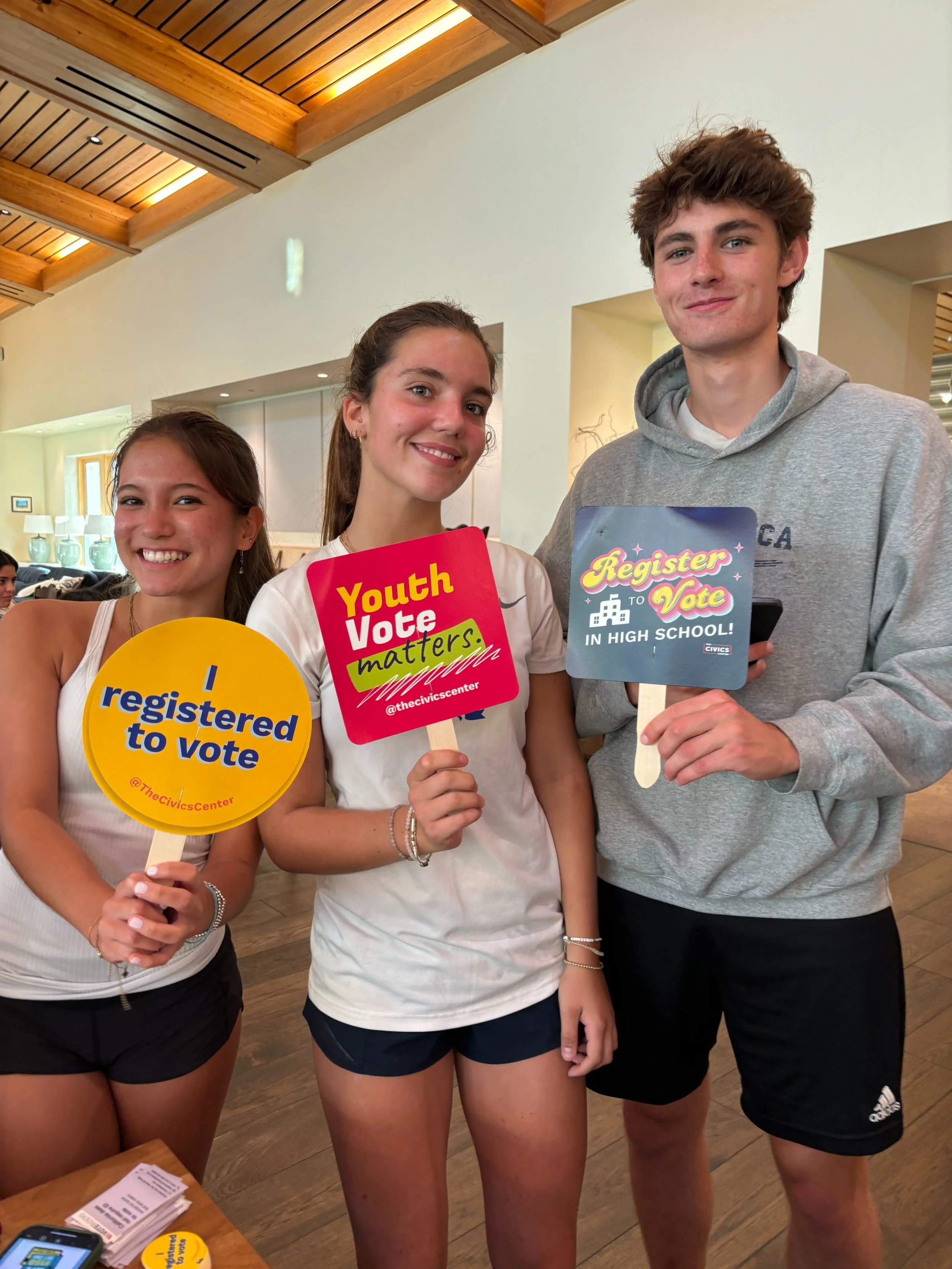
National Voter Registration Day highlights a critical gap in our democracy: millions of 18-year-olds are not registered to vote. High school voter registration drives can empower students to take action and ensure every young person has a voice.
The Civics Center and Energizing Young Voters are teaming up to boost high school voter registration and youth civic engagement across New Jersey.
The Civics Center and PA Youth Vote have signed a new partnership to expand youth voter registration in Pennsylvania. Together, they aim to empower students and educators with nonpartisan, data-driven programs that strengthen civic engagement across the state.
California’s special election in November 2025 could reshape redistricting nationwide. With over a million young voters at risk of being left out, youth registration is critical to protecting democracy.
NYC’s preregistration rates for young voters remain alarmingly low. In this open letter, The Civics Center calls on mayoral candidates to take action.
The 2024 high school voter registration results are in: student-led drives raised youth turnout 23 points above the national average, proving their impact.
As congressional seats open ahead of 2026, nearly 8 million newly eligible voters could shape the outcome—if they’re registered in time.
No Kings Day highlights a core truth: democracy depends on participation. But most high school students aren’t registered to vote—yet. Schools can change that.
These charts reveal how registration systems routinely fail young voters—and why fixing youth voter turnout requires sustained, student-centered investment.
New bills in Ohio could block thousands of young voters. But a local race to register 18-year-olds offers a powerful countermeasure ahead of 2026.
Some say boosting youth registration won’t improve turnout—but new data from three states shows the opposite. Higher registration rates among 18-year-olds are linked to higher participation.
On National Law Day 2025, Laura W. Brill addressed legal professionals and citizens in Los Angeles, urging renewed commitment to the rule of law, judicial independence, and empowering young voters through civic education.
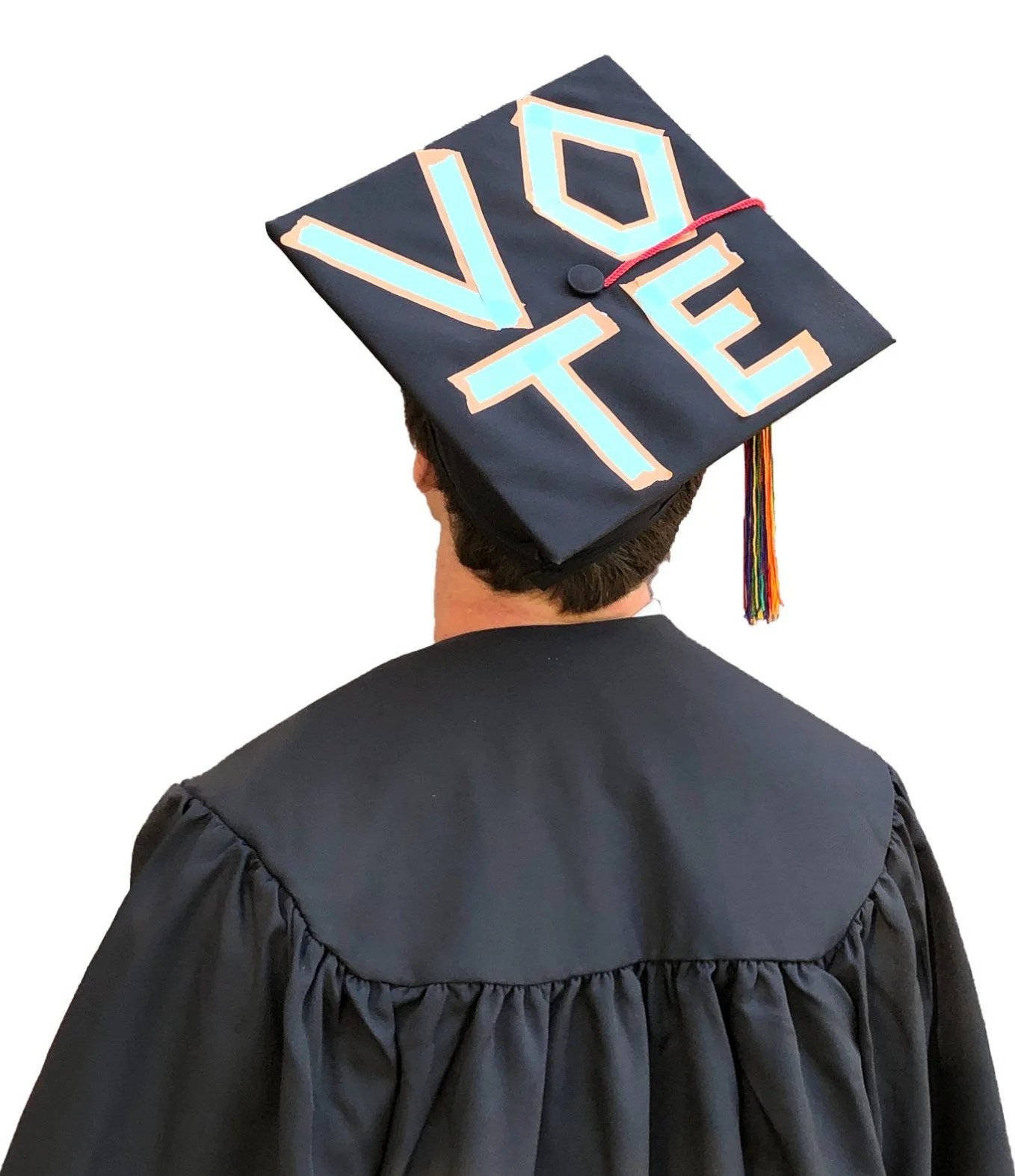
High school graduation marks a critical deadline for voter registration. With millions of seniors about to leave school, the window to engage them is closing fast. Help close the youth voter gap and strengthen democracy by making voter registration part of every graduation season.
New Jersey leads New York in youth voter registration, despite similar demographics. A closer look at policies, systems, and engagement efforts reveals why the gap exists—and what both states can do better.
Authoritarianism thrives when people disengage. Registering high school students to vote is a powerful way to push back—especially now, as millions come of age during graduation season. Democracy can't wait, and neither can we.